
 See My Latest Article on HelloNation
Solar technology is changing in ways that affect more than panel efficiency. Newer systems are becoming better at producing electricity in partial sunlight, managing household energy use, storing power, and responding to grid conditions.
For residents in Nashville, these developments matter because solar performance depends on more than annual sunshine. Roof angle, tree cover, summer heat, severe weather, household electricity use, and the value of backup power all influence which innovations are genuinely useful.
Which solar panel technologies are advancing most quickly?
The biggest improvements are coming from better silicon cell designs, bifacial panels, and tandem solar cells. These technologies aim to produce more electricity from the same roof area, although they are not equally mature or suitable for every home.
Many modern panels use improved versions of crystalline silicon cells. Designs such as tunnel-oxide passivated contact and heterojunction cells reduce electrical losses within the panel. In practical terms, this can mean higher output from a panel with a similar physical footprint.
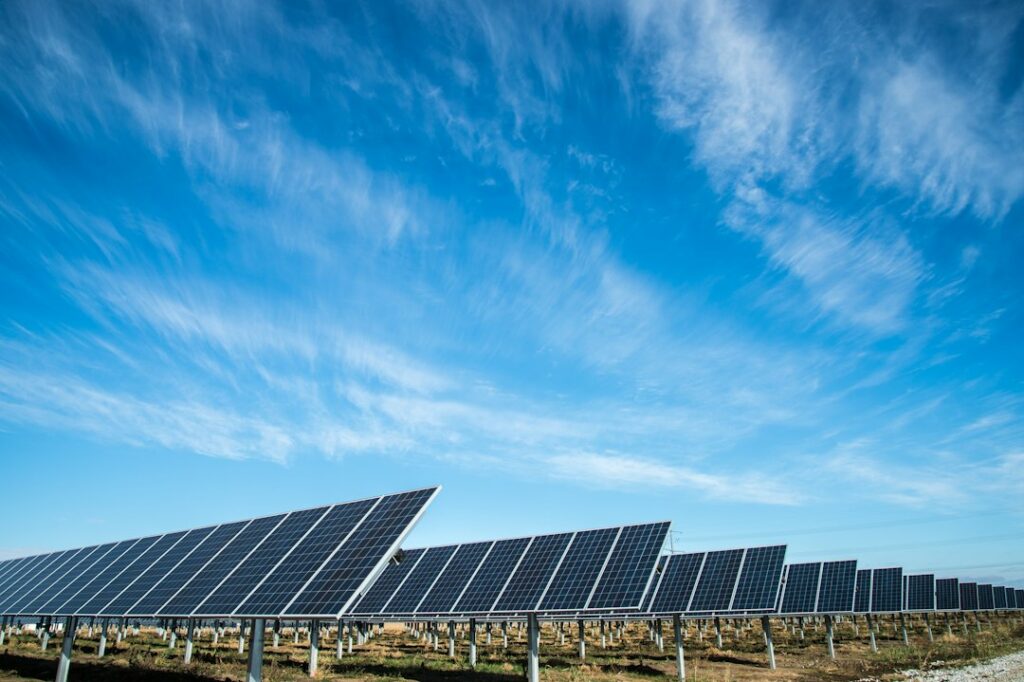
Bifacial panels collect sunlight on both the front and rear surfaces. The rear side can use light reflected from roofing, gravel, concrete, or other bright surfaces. Their benefit is usually greater in ground-mounted or elevated installations than on a typical dark-shingled roof, where little light reaches the back of the panel.
Tandem panels place two different light-absorbing materials together. A leading example combines perovskite material with silicon. The upper layer is designed to capture parts of the sunlight spectrum that silicon uses less efficiently, potentially allowing more electricity from the same area.
Tandem technology remains an emerging option. Researchers are still working on long-term durability, large-scale manufacturing, consistent quality, and performance under real outdoor conditions. High laboratory efficiency does not automatically mean a product is ready for widespread household use.
What are perovskite solar cells, and are they ready for homes?
Perovskites are a class of materials with a crystal structure that can be tuned to absorb different portions of sunlight. They are attracting attention because they may be manufactured using less material and can work effectively as a top layer over silicon.
The main challenge is durability. Solar panels are expected to operate outdoors for decades while facing heat, moisture, ultraviolet light, temperature changes, and mechanical stress. Perovskite devices have shown impressive laboratory results, but researchers are still improving their stability and scaling production from small test cells to full-size modules.
For area households, this means perovskite-silicon panels are best understood as a developing technology rather than a guaranteed upgrade available for every rooftop. Conventional silicon panels remain the more established choice for systems where long operating history and predictable maintenance matter most.
How are batteries becoming more useful with solar?
Battery storage is one of the most practical innovations connected to solar energy. A battery can save excess daytime electricity for evening use, reduce reliance on grid electricity during certain periods, and provide backup power when paired with appropriate equipment.
Battery systems are becoming more capable in several ways:
- Higher usable capacity allows more stored electricity to be available without shortening battery life.
- Improved battery management software helps control charging, discharging, temperature, and system health.
- Newer inverters can coordinate solar panels, batteries, household circuits, and the electric grid.
- Some systems can provide limited backup power without keeping every household appliance operating.
For Nashville residents, battery value may be especially noticeable during hot summer evenings, when cooling demand can remain high after solar production begins to decline. Batteries can also provide resilience during outages caused by storms, falling branches, or other local grid disruptions.
A battery is not automatically a whole-home backup system. Its performance depends on storage capacity, inverter output, the circuits connected to it, and how long an outage lasts. High-power equipment such as electric resistance heating, large pumps, or central air-conditioning can use stored energy quickly.
What is an intelligent inverter?
An inverter converts the direct-current electricity produced by solar panels into the alternating-current electricity used in a home. Newer “smart” inverters do more than perform that basic conversion.
They can monitor system performance, manage voltage and frequency, coordinate with batteries, and disconnect from the grid during an outage when the system is designed for backup operation. Some can also help a solar system respond to grid instructions without requiring the entire system to shut down.
This capability is increasingly important as more homes generate electricity. A system that can communicate with the grid may help manage fluctuations caused by clouds, changing household demand, or large amounts of distributed solar generation.
Smart features do not eliminate the need for proper electrical design. Equipment must still be compatible with the home’s service panel, wiring, utility requirements, and applicable safety rules.
Can solar panels produce useful power on cloudy days?
Yes, but output is lower. Solar panels use available light, not only direct sunshine, so they continue producing electricity under overcast conditions. However, thick cloud cover, heavy rain, shade, and shorter winter days can reduce production significantly.

This is relevant in Nashville, where weather can shift quickly and tree growth may create seasonal shading. A panel’s rated power is measured under standardized test conditions, not under every real-world condition a household will experience.
Newer cell designs may perform better in low-light conditions, but no panel eliminates the effects of shade. Even partial shading can affect a group of panels unless the system uses suitable electrical architecture, such as module-level power electronics.
How is software changing residential solar?
Solar systems increasingly use software to predict production, identify faults, and coordinate energy use. Monitoring platforms can compare expected output with actual production and flag problems such as inverter shutdowns, abnormal panel behavior, or communication failures.
Energy-management systems can also schedule flexible loads. For example, a household might run certain appliances during sunny hours, charge an electric vehicle when solar production is high, or reserve battery capacity for evening use or an expected outage.
These tools work best when the household understands the difference between production, consumption, battery charge, and grid imports. A graph showing solar output does not necessarily show how much electricity the home avoided purchasing or how long a battery could operate essential circuits.
What should Nashville residents look for when evaluating new solar technology?
The newest technology is not always the most appropriate technology. A useful evaluation should consider:
- Roof age, orientation, pitch, and shading from mature trees
- Local weather exposure, including high winds, heavy rain, hail, and occasional ice
- Summer cooling demand and evening electricity use
- Whether backup power is needed and which circuits are essential
- Available roof area compared with the household’s annual electricity consumption
- Equipment warranties, expected degradation, repair access, and replacement costs
- Interconnection requirements and rules that may affect how excess electricity is handled
Efficiency is only one part of system performance. A slightly less efficient panel may be more practical if it has a longer operating history, better shade tolerance, or a design that fits the roof more effectively.
The most meaningful innovation is often the combination of reliable panels, intelligent controls, appropriately sized storage, and a system design that reflects the home’s actual conditions. For local households, careful assessment of shade, weather, electricity use, and outage priorities remains just as important as the headline efficiency number.